How to Budget for a Septic System Installation Without Surprises
Last updated: September 10, 2026
Key Takeaways
- A problem is focusing only on installation and ignoring the next 10 years.
- Check how often those items must be inspected or serviced under local rules.
- How much should I keep as a contingency?
- It also assumes you are dealing with local rules that can change by county, state, province, or country.
Who this is for, and what you need to know first
A homeowner planning a new septic system or a full replacement needs more than a tank price. This guide is for anyone trying to figure out how to budget for septic system installation without surprises before the digging starts. It assumes you already know the basics: a tank is only one piece, alongside a drainfield or leach field, excavation, permits, design work, and a soil evaluation. Local rules can shift by county, state, province, or country. They do.
This is financial information, not financial advice. Septic costs affect cash flow, borrowing, and home value, so I’d still want a qualified local contractor, designer, or financial adviser in the loop if the site is odd or the numbers are tight. For U.S. homeowners, the EPA notes that septic systems require regular maintenance and can fail if neglected; a local professional can help you budget for both installation and upkeep. EPA Septic Systems
The real question is simple: do not price the tank alone. A septic installation budget should cover the system design, site investigation, permitting, earthwork, materials, labor, inspections, electrical work if a pump is needed, landscaping repair, and a reserve for surprises. Leave out that last line and the budget becomes theater.
This topic is not for someone who wants a fixed national price. No universal figure survives differences in soil, lot size, setbacks, and local code. A flat site with good percolation is one job; a steep, wet, rocky parcel is another. Costs can also swing sharply by system type, and the EPA notes that advanced systems typically need more maintenance than conventional ones. EPA Septic Systems Overview
What should I budget for first?
Start with the site work and the paperwork, not the tank itself. That’s the trap. The tank quote is often only one slice of the total, because site conditions usually drive the whole design: soil depth, groundwater, ledge, lot size, slope, and required separation from wells, streams, property lines, and buildings.
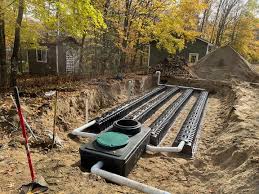
Begin with four cost buckets. First: the site evaluation, which may include a soil test, a percolation test, or both. A percolation test measures how fast water moves through soil; a soil profile looks at layers, depth to limiting conditions, and seasonal water table indicators. Second: the design or engineering fee, which may be required for conventional or alternative systems. Third: permitting and inspection fees. Fourth: installation itself — excavation, tank, piping, distribution, drainfield, electrical components, backfill, and restoration.
A “standard” system may not fit. On a lot that is too small, too wet, too shallow to bedrock, or too close to a well, gravity can stop working on paper before the job even starts. Alternative systems can also add ongoing service requirements, which means the budget does not end at installation. EPA guidance and state agencies both say soil and site conditions drive system choice, so a local designer should confirm the layout before you lock in a number. EPA Septic Systems
I’d treat the reserve as part of the budget, not as an afterthought, but I would still have a qualified local designer or contractor confirm the amount for your site. Set aside a separate contingency line for conditions the first excavation reveals. The right size depends on uncertainty, not optimism. If the lot is straightforward, the reserve can be modest. If it is wooded, sloped, or has a history of failed drainage, keep more back. Plain and simple.
How do I build the budget step by step?
Build it in the order the work actually happens, not in the order a sales sheet is written. Here’s the sequence I would use.
- Get the site data first. Ask for a soil evaluation, a proposed system type, and any required setbacks before any final price is discussed. Confirm the lot size, slope, well distance, and test results. A problem is any quote that skips soil or site constraints.
- Ask for the permit path in writing. Confirm whether the local authority requires a permit, an engineered design, inspections, or as-built drawings. Find out which office issues the permit and what documents they need. A problem is vague language such as “permit included” without naming the permit type.
- Separate fixed costs from variable costs. List items that are likely fixed, such as design fees, and items that can move, such as excavation depth or extra pipe. Make sure each line item is priced separately. A problem is a lump sum with no breakdown.
- Price excavation as a risk area. Excavation can change quickly if rock, groundwater, or a buried obstacle appears. Check whether rock removal, hauling, dewatering, or extra machine time are included. A problem is an excavation price that excludes “unforeseen conditions.”
- Include all distribution components. Budget for distribution boxes, piping, filter units, pump tanks if the design uses pressure dosing, and electrical service if a pump is required. Confirm whether the design is gravity-fed or pump-assisted. A tank quote does not automatically cover drainfield hardware. Not even close.
- Add restoration and access costs. Confirm what happens to driveways, lawns, shrubs, retaining walls, and fences after heavy equipment leaves. Check whether seeding, topsoil, gravel, or hardscape repair is included. A finished budget that ignores the yard is not finished.
- Set a contingency line. Reserve money for changes triggered by the permit office or field conditions. Make sure this is separate from the main bid. A problem is using the emergency fund for a known project requirement.
- Compare the maintenance burden. Ask whether the system needs a pump, alarms, filters, or periodic service agreements. Find out how often those items are expected to be inspected or serviced under local rules. A problem is focusing only on installation and ignoring the next 10 years.
That order matters because a septic budget is a chain. Soil shapes design. Design shapes permit requirements. Those requirements shape excavation and equipment. Equipment shapes restoration. Change one link, and the total moves.
When budgets go off the rails, it is usually because a homeowner prices the visible parts and forgets the regulatory ones. Hidden costs are not always obvious to the contractor or homeowner at the start, so it helps to talk about exclusions early. Honestly, that conversation saves headaches.
What do contractors leave out of a septic quote?
Usually, they omit the pieces that are easiest to file under “site conditions,” and that’s where the money gets nicked. A quote may mention tank size and installation labor but leave out design work, permit fees, soil testing, electrical trenching, and final grading. It may also skip any work that depends on the inspection schedule or the weather.
Read every line. If it does not say who handles the permit application, who pays for the inspection, and who is responsible for changes if the first layout fails, assume those items are not included. Ask whether the quote covers:
- the tank, lids, risers, and distribution components
- excavation and bedding material
- pipe runs from the house to the system
- pump equipment, alarm panels, and electrical connections if needed
- crushed stone, sand, or other specified media
- hauling away spoil or excess soil
- yard restoration and cleanup
- engineering or design services
- as-built drawings or completion documents
“As-built” means the record of what was actually installed, not just what was planned. Some jurisdictions require it before final approval. Ignore that paperwork and it can become the last surprise.
A contractor who gives a very low number may be excluding more than one of these items. That does not make the bid dishonest by itself, but it does make it incomplete for budgeting. A complete budget should look a little uncomfortable, because honest numbers usually do. In practice, a quote that seems too clean often gets expensive once the field conditions show up.
I’d be extra careful with any quote that uses phrases like “site prep extra,” “rock excavation extra,” or “permits by owner” without a written explanation of what those extras usually mean. Those phrases are not wrong; they are warning labels. The quoted number is not the full number.
When should I stop and get qualified help?
Stop and get qualified help when the site, code, or design pushes the project beyond a conventional gravity system. Here are the clearest stop signs.
High groundwater or a wet season high water table: This means the soil may not accept a standard drainfield safely or legally — get a licensed septic designer or engineer before budgeting further.
Bedrock, ledge, or shallow restrictive layers: This means excavation depth is limited and the drainfield may need a different design — stop relying on a simple tank-and-trench estimate.
Small lot size or tight setbacks: This means the required absorption area may not fit — ask a local professional to check code distance requirements before you assume the system is feasible.
Evidence of a failed or abandoned system: This means the site may need remediation, soil replacement, or a replacement field — do not budget as if it were a clean new install.
Need for pumps, alarms, or advanced treatment: This means the system has electrical and maintenance components that change both installation and ongoing cost — use a qualified designer to price the real configuration.
Shared wells, easements, or unclear property lines: This means legal and siting questions can change the entire layout — confirm boundaries and setbacks before you spend on excavation.
These are not just “more complicated” cases. They can decide whether the system can be installed at all, or whether the system must be a specific approved type. Not a place for brochure math. The EPA also recommends professional maintenance for many systems, especially when pumps or advanced components are involved. EPA Septic Systems
If your project is conventional, the budget work can start with local quotes and permit research. For one of the cases above, the first dollar should go toward design clarity, not dirt moving.
The mistakes that blow up a septic budget
The biggest mistake is budgeting only for the tank and labor. The consequence is a quote that looks affordable until the permit, soil work, and excavation extras land on top. The better move is to build the estimate from the ground up: site evaluation, design, permit, installation, and restoration.
Another mistake is ignoring the drainfield. The consequence is underpricing the largest area of the system in many installations. The correct alternative is to ask for the entire wastewater disposal system, not just the tank.
A third mistake is treating “rock” or “poor soil” as a rare surprise. The consequence is a budget that collapses once the machine hits bad ground. The right approach is to ask the contractor how rock, ledge, or wet soil is billed before work begins, and to have a local professional verify whether the site conditions point to a different design.
A fourth mistake is forgetting access. The consequence is paying more if equipment cannot reach the work area easily or if a driveway has to be removed and rebuilt. Check gates, driveway width, overhead clearance, and turning space before the quote is finalized.
A fifth mistake is failing to budget for ongoing maintenance on an alternative system. The consequence is a lower first-year cost and a higher long-term burden. Ask what inspections, pumping intervals, alarms, or service agreements the approved design requires under local rules.
A sixth mistake is keeping no contingency. The consequence is borrowing at the last minute or cutting corners on a required component. Keep a separate reserve line that you do not count on for the base bid.
What changes the budget on unusual sites?
Unusual sites change the budget because the standard layout no longer fits the soil, slope, or code. The most common edge cases are lots with shallow soil, steep grade, high seasonal groundwater, small footprints, rocky terrain, and properties with a replacement area already constrained by existing buildings.
A steep site can require more grading, longer piping runs, or pump assistance. That affects both installation and future service. A rocky site can require excavation that takes longer than a straightforward trench, and the spoil may be harder to reuse. A small lot can force a more compact or advanced design, which often means more engineering and more components. A high-groundwater site may need a raised bed, mound, or other approved alternative, and those systems usually require more material and more visible footprint.
If the property has an old system that failed, the budget can change again. Sometimes the old tank can be abandoned in place under local rules; sometimes it must be pumped, crushed, filled, or removed. That is why a replacement job is not the same budget category as a first-time install.
The plain rule: the less the site looks like a broad, dry, open area with deep suitable soil, the more uncertainty belongs in the budget. And the more uncertainty there is, the more important it is to get a documented design before a final number is treated as real.
How do I know if the budget is complete?
Your budget is complete when it covers the full path from soil evaluation to final approval and landscape repair. A complete budget usually has at least these pieces: site testing, design, permits, excavation, system components, installation labor, inspection-related work, electrical or pump work if needed, restoration, and contingency.
I’d also check whether the budget reflects the system type actually allowed on the site. A budget for a gravity system is not complete if the soil report points to an alternative design. Likewise, a budget is not complete if it omits future obligations such as pumping, filter cleaning, or service contract requirements that the approved design may impose.
A practical test: if the quote can survive three questions — “What if rock is found?”, “What if the permit requires a different layout?”, and “What if the yard must be restored?” — then the budget is probably much closer to reality. If it fails any of those questions, it is not complete.
I’d also want the contractor or designer to state what is excluded. Exclusions are not a defect; they are a budgeting tool. But if exclusions are broad and vague, the final bill will be too.
The result you want is not a low number. It is a number that still makes sense after the first inspection, the first permit review, and the first shovel of dirt.
Septic budget FAQs
How much should I keep as a contingency?
I’d keep enough to handle site surprises, permit changes, and restoration, but the right amount depends on the lot and local requirements. A qualified local contractor or designer can help you set the reserve based on the site conditions and the approved design.