Which Septic System Type Is Best for Your Property?
Last updated: September 10, 2026
Key Takeaways
- The best septic system is the one that matches your soil profile, setback limits, and daily wastewater load.
- Sounds simple. It rarely is.
- “Drainfield” usually means the area where treated effluent spreads through soil after leaving the tank; check your local code or a septic professional.
- Those systems cost more and need more attention, but they can make an unbuildable or marginal site usable.
Quick answer: for which septic system type is your property, the best choice is the one your soil, lot size, water table, and local rules can support after a site evaluation. On many parcels, that ends up being a conventional gravity system. On tighter sites, pressure-dosed, mound, or ATU designs usually move to the front of the line. Get a soil report, because a 1-acre lot can still fail if the seasonal water table is too high.
The best septic system for your property is the one your soil, lot size, water table, and local rules can actually support. In practice, that usually means a conventional gravity system if the site drains well, a pressure-dosed or mound system if the soil is tighter or the lot is constrained, and an advanced treatment unit if the site is small, fragile, or regulated more strictly. This article assumes you already know you need an on-site wastewater system and want to choose the right type before you spend money on design and permits. For which septic system type is your property, the first step is usually a site visit, a soil evaluation, and a permit check.
The right answer depends on the site, not the sales pitch

The best septic system is the one that matches your soil profile, setback limits, and daily wastewater load. That sounds simple, but it is where a lot of bad choices start. One 1-acre lot may work fine while another only 50 feet away fails, because the soil shifts, the seasonal groundwater rises, or the house has five bedrooms instead of three. In many jurisdictions, setback rules run 50 to 100 feet from wells, and the wrong field location can end the project before design is complete.
Deep, well-drained soil changes everything. A conventional gravity system is the simplest option when you have enough room for a drainfield and the ground cooperates. “Drainfield” usually means the area where treated effluent spreads through soil after leaving the tank; check your local code or a septic professional. If your soil percolates reasonably well and your lot can meet the required setbacks from wells, streams, property lines, and buildings, this is often the least complicated path. For which septic system type is your property, gravity is often the answer when the site has at least 2 to 4 feet of usable soil above limiting conditions.
If the site has slower soil, shallow bedrock, a high water table, or a small footprint, I would look at a pressure distribution system, a mound system, or an aerobic treatment unit. They cost more. They also ask for more care. But they can turn a marginal parcel into a usable one, which is not nothing. Many counties also require a reserve area equal to the initial field, so a lot that looks large on paper may still be too tight.
What people get wrong is treating septic as a brand choice. It is a civil-site decision first. The local health department or permitting authority, a soil evaluation, and a site plan tell you more than a brochure does. In many areas, a licensed soil evaluator or septic designer will base the recommendation on a perc test or, better yet, a full soil and site assessment rather than a single quick test. The EPA says onsite systems should be inspected regularly, and many local programs require permits before installation.
If you already have a functioning system and are replacing a failed component, the best type may be the one that fits the existing footprint and permit history. That can save you from tearing up a driveway, a patio, or a mature tree line.
Which septic system types are actually worth comparing?
The system types worth comparing are conventional gravity, pressure distribution, mound, aerobic treatment unit, and sand filter systems. Those are the names you will hear most often in real permit discussions, and each solves a different problem.
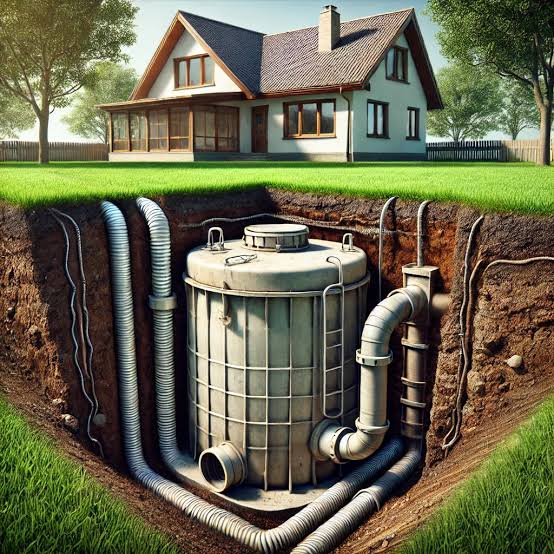
A conventional gravity system sends wastewater from the tank to the drainfield by slope alone. Clean on paper. Simple in the field. Usually the easiest to maintain, too. The catch is plain: it needs favorable soil and enough downhill room. It is the wrong choice for shallow soil or a lot where the field would sit too close to groundwater.
A pressure distribution system uses a pump and small pipes to dose effluent evenly across the field. That even dosing helps the soil rest between doses. It is a good middle ground when the site is limited, but it adds electrical parts and a pump chamber that must be maintained. I would not choose it for someone who wants the lowest-maintenance setup possible.
A mound system raises the drainfield in a manufactured sand fill over the native soil. It exists for sites with restrictive layers, seasonal saturation, or shallow soil. It can work where gravity systems cannot, but it takes more space than people expect and changes the look of the yard. Not exactly backyard camouflage. It is not the right fit if you want a nearly invisible installation.
An aerobic treatment unit, or ATU, adds air to promote more complete biological treatment before effluent reaches the dispersal area. That can help on smaller lots or more sensitive sites. The trade-off is upkeep: electrical components, alarms, and service visits matter. If you do not want a system that depends on attention, this is not your pick.
Sand filters sit between the tank and final dispersal area. They are useful when additional treatment is needed before discharge to soil. They are not a magic fix for bad siting, and they still need enough room and proper maintenance.
How do I choose the right septic system for my property?
You choose the right septic system by checking soil, space, water table, slope, and daily flow in that order. I would not start with cost, because a cheap system that does not fit the lot is not cheap for long.
- Confirm your daily wastewater load. Count bedrooms, bathrooms, and expected occupancy, then compare that to your local design flow standard, which is often tied to bedroom count. Verify that your chosen system is sized for the actual use, not just the current family. A problem shows up when the system is undersized for future guests, rental use, or an added bathroom.
- Get a soil evaluation from the proposed drainfield area. Look for soil texture, structure, restrictive layers, and mottling that suggests seasonal saturation. Verify depth to limiting conditions in inches or feet, because shallow restrictive layers often rule out gravity systems. A problem shows up if the evaluation finds clay hardpan, ledge, or wet soil within the required separation distance.
- Check the seasonal high water table. This is the highest groundwater level expected during the wet season. Verify that the proposed infiltrative surface stays above the required vertical separation, which varies by jurisdiction but is often measured in feet. A problem shows up if the field would sit too close to groundwater, because effluent may not be treated safely.
- Map setbacks on a site plan. Measure distances to wells, streams, ditches, property lines, buildings, and slopes. Verify that you can fit the tank, reserve area, and drainfield without violating local setbacks, often shown in feet. A problem shows up if the “best” field location conflicts with a well or leaves no room for a replacement area.
- Match the system to the slope. Walk the lot with a graded plan if possible and note whether the site is nearly flat, gently sloped, or steep. Verify whether gravity flow is practical or whether dosing or a pump is needed to move effluent. A problem shows up if the line would be too flat to drain properly or too steep to protect the field from overloading.
- Check power and access for mechanical components. If the site points toward a pump, ATU, or control panel, confirm you have reliable power and a path for service vehicles. Verify that alarms, lids, and access risers will be reachable year-round. A problem shows up if the only workable design depends on equipment nobody can service easily.
- Compare required maintenance, not just installation cost. Ask what needs pumping, inspection, or service and how often the local authority expects it. Verify that the owner can actually keep up with the schedule, especially for ATUs and pressure systems. A problem shows up when the best site fit is a system the owner will ignore.
- Ask for a reserve area. Keep space for future repair or expansion, often the same size as the initial field. Verify that the reserve area is protected from paving, pools, and compaction. A problem shows up when the lot has no fallback if the first field fails.
The system that emerges from those steps is usually obvious. A deep, dry, roomy lot points to gravity. A difficult lot with workable soil points to pressure distribution or a mound. A small or sensitive lot often pushes the choice toward an ATU or a more engineered system. The “best” answer is the one that passes the site rules without pretending the site is better than it is. For which septic system type is your property, the design that passes inspection is usually the one worth pursuing.
What a generic article gets wrong about septic choices
The wrong article says conventional is always best. It is not. It is best only when the site deserves it. On a 2-bedroom cabin with deep sandy soil, gravity may be ideal. On a 4-bedroom home over shallow bedrock, it may be impossible no matter how much someone wants it.
The wrong article also treats maintenance as a footnote. Backwards thinking. A gravity system can often run for years with only pumping on a sensible schedule, but an ATU or pump-based system may need inspections, alarms checked, and electrical parts maintained. If the owner is away often, renting the house, or unwilling to service mechanical components, that matters as much as soil type. The EPA recommends routine inspections, and many jurisdictions set 1- to 3-year inspection intervals for mechanical systems.
Another common miss is forgetting the replacement area. Septic permits usually require a second area for future repair. If the property has only one usable corner, the “best” system may be the one that fits the reserve area, not the one with the smallest tank.
A third mistake is confusing soil that drains quickly with soil that treats wastewater well. Very fast-draining sandy soil can create its own risk if the design does not provide enough treatment before effluent reaches groundwater. Fast is not automatically better. Sometimes it is a trap.
Finally, generic advice rarely mentions local code. Septic rules are not uniform. Setbacks, allowable system types, inspection schedules, and design standards vary by county and state. A property that can support a mound in one jurisdiction may face different separation rules in another. Your local permitting office, the site evaluator, and the design professional are the people who tell you which systems are even legal on your parcel. For which septic system type is your property, local code is often the deciding factor.
When should you stop trying to force a standard septic design?
You should stop trying to force a standard septic design when the site keeps failing basic siting checks. That is the point where a different system, a different building placement, or a different wastewater strategy becomes the better move.
Shallow bedrock within the required separation distance: The field cannot use enough soil for treatment — Switch to a raised, engineered, or alternative treatment design if permitted, or move the building footprint.
Seasonal groundwater too close to the proposed field: Effluent may reach saturated soil before it is properly treated — Consider a mound, ATU, or a site redesign.
Lot too small for setbacks plus reserve area: A legal system cannot fit without a waiver, and waivers are not guaranteed — Rework the building plan before you buy equipment.
Steep slope or unstable fill: Gravity flow and trench stability become unreliable — Use a design intended for the slope, or choose a different field location.
Household load is larger than the site can handle: More bedrooms or rental use can overwhelm the design flow — Reduce demand, separate flows where allowed, or size up the system legally.
No realistic maintenance access: Pump tanks, alarms, or access lids cannot be reached safely — Simplify the design or change the layout so service is possible.
If any of those are true, the wrong move is to “make it work” by shrinking trenches, skipping a reserve area, or ignoring a setback. That is how a permit gets delayed or a system fails early.
What problems do people create for themselves?
People create the worst septic problems by choosing for the yard instead of the soil. A pretty corner of the property is not the same thing as a suitable disposal area. If you place the field where the soil is marginal because it is out of sight, you may save the view and lose the system.
A second mistake is underestimating site prep. A mound system, for example, needs careful grading and fill placement, and compaction can ruin the infiltration area. The correct approach is to protect the field during construction, not after it is already damaged.
A third mistake is buying into “larger tank means better system.” Tank size helps with settling and surge control, but it does not fix poor soil, bad setbacks, or a high water table. The drainfield does the real work.
A fourth mistake is skipping future use. If the house may become a rental, a multigenerational home, or a guest-heavy property, design for that load now. It is cheaper to size correctly than to retrofit a field later.
A fifth mistake is letting landscaping dictate utility placement. Tree roots, irrigation, decks, and driveways can interfere with lids, lines, and reserve areas. The correct alternative is to reserve the septic footprint first, then design the rest of the property around it.
The bad result usually looks the same: slow drains, standing effluent, odors, surfacing sewage, or a permit that never closes. Those are not “normal septic issues.” They are design or siting failures.
What should the final decision look like on paper?
The final decision should be a site-specific design, not just a system type. You want a plan that shows the tank, treatment unit if any, distribution method, field location, reserve area, setbacks, and the soil basis for the choice. That plan should make sense to a permit reviewer in one reading.
If you are choosing between two feasible systems, I would usually favor the simpler one. A conventional gravity system is often the best long-term answer when the site allows it because it has fewer moving parts. I would choose a pressure-dosed or mound system when the soil requires better distribution or more separation from groundwater. I would choose an ATU when the lot is tight, the site is sensitive, or local rules demand extra treatment, but only if the owner is prepared for ongoing maintenance.
A good result is boring. The permit moves. The installer does not need to improvise. The field fits with room left over. The owner knows where lids and alarms are. And the system is designed for the property that exists, not the one someone hoped existed. For which septic system type is your property, the paperwork should show why the choice fits the site.
Frequently asked questions
Is a mound system better than a conventional septic system?
A mound system is better only when the site needs it. It handles shallow or restrictive soils better than a conventional system, but it costs more, takes more space, and is more visible.
Can I choose the cheapest septic system type?
Only if the cheapest type fits the soil and local code. The lowest upfront cost can become the most expensive option if it fails the permit review or needs early repair.
Does a bigger septic tank make the system better?
No. A bigger tank can help with surge and settling, but it does not solve poor soil, bad setbacks, or high groundwater. The drainfield still has to be right.
Which septic system needs the least maintenance?
Conventional gravity systems usually need the least attention, but you should still pump the tank on a schedule and follow local inspection rules.